VirusTotal multisandbox project welcomes Sangfor ZSand. The ZSand currently focuses on PE files,with extensions to other popular file types like javascript and Microsoft office to be released soon.
In their own words:
ZSand, developed by Sangfor Technologies’ Cloud Computing & Security Team, is an agentless behavioral analysis engine incorporating multiple innovative techniques. At the systems level, zSand employs Two-Dimensional Paging (TDP) techniques to inject hidden breakpoints, enabling accurate monitoring of the API calling sequence of a given process for further fine-grained analysis. At the GUI level, interactions are simulated by the virtual network console (VNC) and visual artificial intelligence (AI) techniques, providing a lifelike and fully functional sandbox. At the detection level, zSand identifies all forms of malware, including vulnerability exploits, by uncovering malicious behaviors and synergistically applying both conventional rule-based approaches and advanced AI algorithms. As a core innovation of the Sangfor anti-malware research group, zSand is a significant improvement in cyber-security capability for both Sangfor Technologies and its clients, customers and partners. Use cases include proactive hunting for unknown threats and the near real-time production of threat intelligence identifying malicious URLs, domain names, files, memory fingerprints, and malicious behavioral patterns. zSand is an agentless behavior monitoring engine, allowing users to deploy real-time defenses in a virtual environment.
In comparison with other sandboxes, the key advantages of zSand include:
- High runtime performance -- By optimising the configuration of TDP and reducing the number of VMExit events, zSand minimizes monitoring overhead and resource utilization.
- Strong anti-evasion measures -- Thanks to high performance hardware virtualisation and agentless features, zSand is immune to anti-sandbox detection.
- Comprehensive monitoring -- zSand retrieves detailed malware behavioral events and associated states of hardware including CPU, memory, disks, and network interfaces.
- Extensive and in-depth analysis -- Designed by cyber-security specialists and AI specialists, zSand is able to dynamically detect elusive and concealed malicious behavior, vulnerability exploits, malware persistence, and privilege escalation, at low levels.
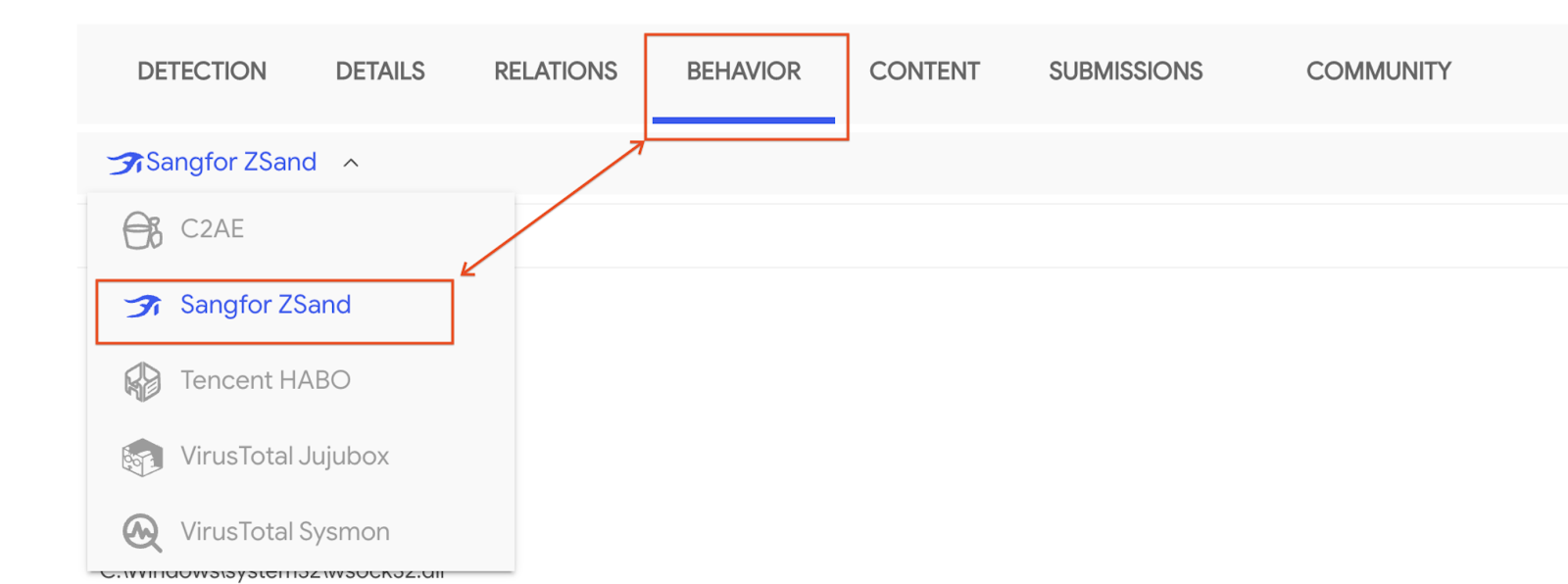
Take take a look in the behavior tab to view these new sandbox reports:
Example reports:
You can also take a look at a couple of Sangfor ZSand behavior analysis reports here and here.In case you are interested in searching for specific Sangfor ZSand reports, VirusTotal premium services customers may specify so using sandbox_name:sangfor in their queries.
Pivot on interesting behavioural characteristics
All malware uploaded to VirusTotal is detonated in multiple sandboxes, providing security analysts with many interesting and powerful possibilities. Having multiple fine-tuned sandboxes increases the possibilities of malware detonating properly (remember malware usually implements different anti-sandboxing techniques), and provides valuable dynamic data on how the malware behaves.
Why is this data valuable? Because it gives us details that are not visible at static analysis time. For instance, we can use this data to land some TTPs into something more actionable. We will get back on this topic on a future blogpost.
For example, taking in the following sandbox report we find some potentially interesting mutex names.
Why is this data valuable? Because it gives us details that are not visible at static analysis time. For instance, we can use this data to land some TTPs into something more actionable. We will get back on this topic on a future blogpost.
For example, taking in the following sandbox report we find some potentially interesting mutex names.
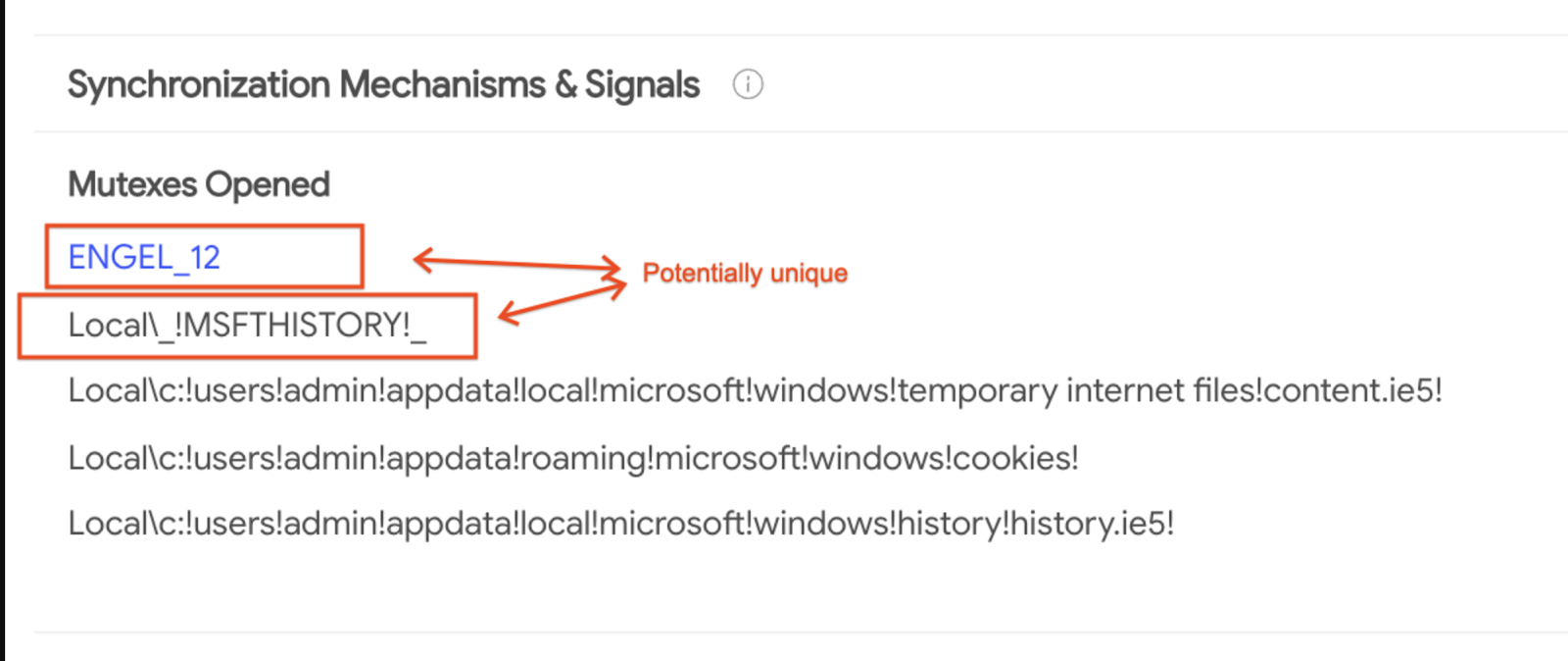
We can use this data to pivot and find other malware having the same mutexes when detonated on our sandboxes. By clicking on one of the interesting mutexes, in this case ENGEL_12, we will create a new search ( behaviour:ENGEL_12) which provides us with samples belonging to a common family of padodor malware.
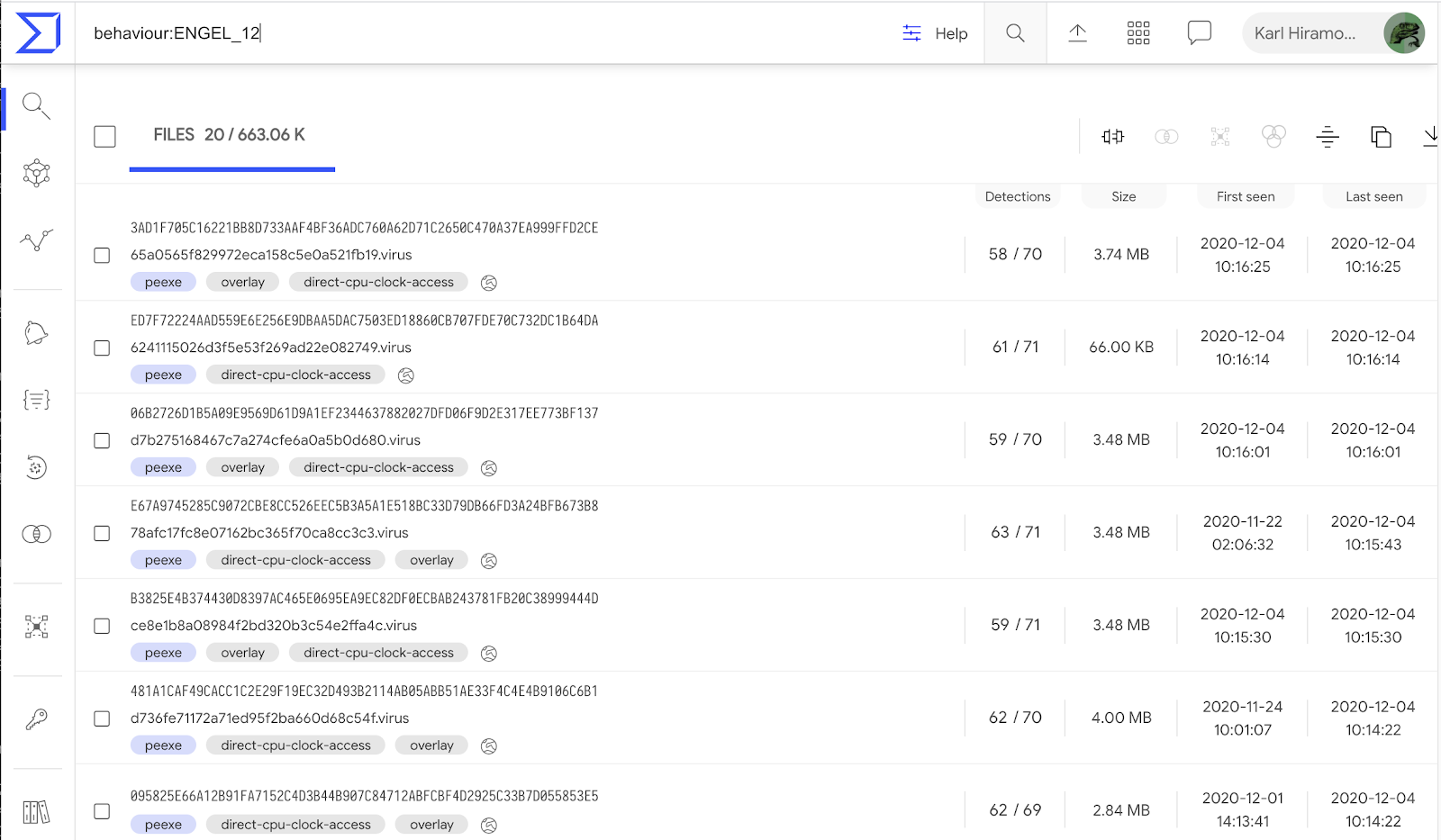
It turns out that this is a valuable dynamic indicator we can use to identify malware samples belonging to this particular malware strain. From VirusTotal, we welcome this new addition to our Sandboxing arsenal. Happy hunting!